1
Which of the following mountain ranges is known as the 'young fold mountains'?
By Priya Sharma · Static GK Expert
20 MCQs on major mountains and peaks of India — Himalayas, Western Ghats, K2 and more for UPSC and SSC exams.
Which of the following mountain ranges is known as the 'young fold mountains'?
What is the highest peak of the Aravalli Range?
The 'Kanchenjunga' peak is located in which state of India?
Which pass connects the Srinagar valley with Leh?
The 'Palghat Gap' separates which two mountain ranges?
Which is the highest peak of the Eastern Ghats?
The 'Pir Panjal' range is a part of which Himalayan division?
Which of the following is the oldest mountain range in India?
Nanda Devi peak is located in which state?
Where do the Eastern Ghats and Western Ghats meet?
Which peak is known as the 'Anaimudi'?
The 'Nathu La' pass is located in which state?
Which of the following ranges lies between the Narmada and Tapti rivers?
The 'Shivalik' range is also known as:
Which of the following peaks is located in the Zanskar Range?
The 'Dhupgarh' peak is the highest point of:
Which pass is known as the 'Gateway to the Brahmaputra valley'?
Which mountain range is famous for the hill station 'Ooty'?
The 'Karakoram' range is situated in which region?
Which of the following is NOT part of the Western Ghats?
Which among the following mountain ranges forms the watershed between the Ganga and the Narmada river systems?
The 'Nanda Devi' peak is located in which state/union territory?
Which of the following is considered the oldest fold mountain range in India?
The 'Palghat Gap' serves as a crucial pass between which two mountain ranges?
What is the correct sequence of the following ranges from North to South?
Guru Shikhar, the highest peak of the Aravalli Range, is located near which hill station?
Which pass connects the Srinagar-Leh highway across the Zanskar Range?
The 'Doddabetta' peak is located in which hill range?
Which mountain range is popularly known as the 'Sahyadris'?
Which of the following peaks is NOT located in the Himalayas?
The 'Khardung La' pass is located in which mountain range?
Which of the following mountain ranges is known for block mountains?
The 'Nathula Pass', which was reopened for trade with China in 2006, is located in:
Which peak is the highest point of the Satpura Range?
Which mountain range separates the Deccan Plateau from the Indo-Gangetic plain?
The 'Baralacha La' pass connects which two states/UTs?
Which is the highest peak of the Eastern Ghats?
The 'Pir Panjal' range is part of which Himalayan division?
Which of these passes is located in the state of Arunachal Pradesh?
What is the approximate orientation of the Aravalli Range?
Which mountain range acts as the drainage divide between the Indus and the Ganga river basins?
The 'Kanchenjunga' peak is located in which mountain complex?
Which of the following passes is known as the 'Gateway to the Zanskar Valley'?
Which mountain range is famously characterized by the presence of 'Duns' (longitudinal valleys) between its folds?
The 'Garo-Khasi-Jaintia' hills are an eastward extension of which geological structure?
Which of these peaks is the highest in the 'Kumaon Himalayas'?
The 'Shencottah Gap' provides connectivity between which two regions?
The 'Bomdi La' pass is situated in which state?
Which mountain range in India is an example of 'Residual Mountains'?
Which pass connects the Kullu Valley with the Lahaul and Spiti Valleys in Himachal Pradesh?
The 'Maikala Range' is a part of which larger mountain system?
Which peak is known as the 'Queen of the Nilgiris'?
The 'Niti Pass' connects India with which neighboring country?
Which of these hill stations is located in the 'Cardamom Hills'?
Which mountain range is famous for the 'Valley of Flowers'?
Which of the following passes is known as the 'Land of High Passes'?
The 'Mahadeo Hills' are a part of which range?
Which pass in the Western Ghats connects Nasik and Mumbai?
Which mountain range acts as a barrier for the Arabian Sea branch of the monsoon?
Which of the following mountain ranges is primarily composed of sedimentary rocks and is considered the youngest range in India?
The 'Lipulekh Pass', which is a significant point for the Kailash Mansarovar Yatra, is located in which Indian state?
Which mountain peak is situated at the tri-junction of India, China, and Nepal?
The 'Thal Ghat' pass connects which two major urban centers in Maharashtra?
What is the correct geographical order of the following hill ranges from North to South?
Which peak is recognized as the highest mountain in the Peninsular Plateau of India?
The 'Zoji La' pass provides a vital link between which two regions?
Which mountain range is geographically described as a 'horst' or block mountain located between the Narmada and Tapti river valleys?
Which pass is known as the 'Gateway to the Kashmir Valley' from the Jammu region?
The 'Jelep La' pass, which provides a route through Sikkim to Tibet, is located in which mountain range?
Which of the following hill ranges is NOT a part of the Western Ghats?
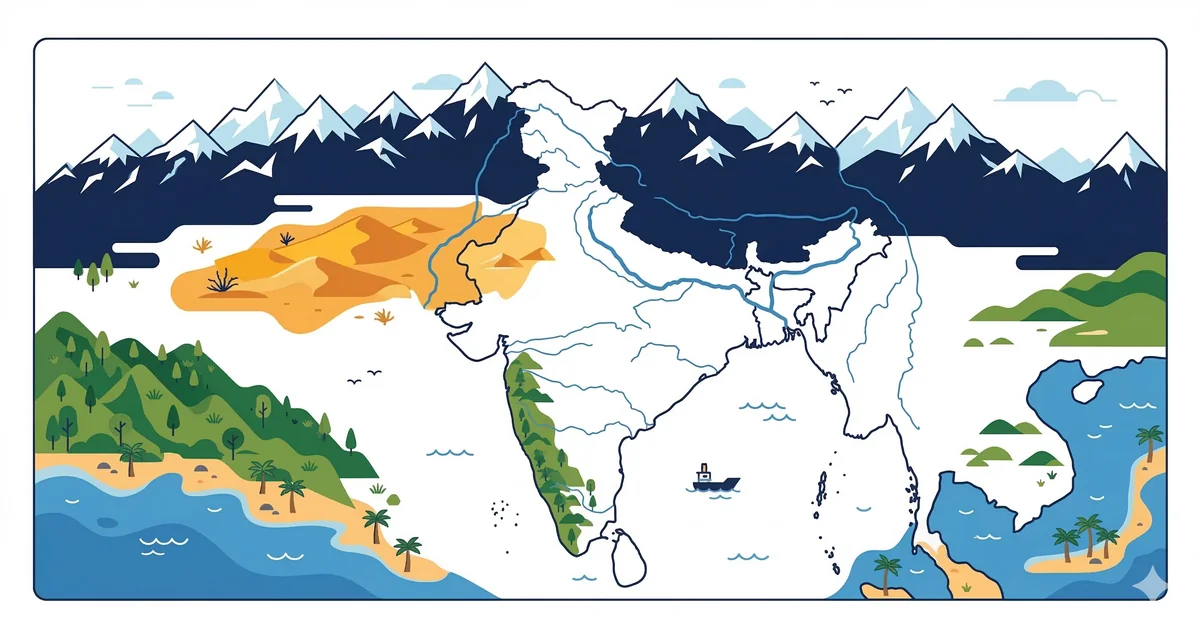
The Himalayas, meaning "Abode of Snow," are the youngest fold mountains in the world, formed due to the tectonic collision between the Indian Plate and the Eurasian Plate. Stretching approximately 2,400 km from the Indus River in the west to the Brahmaputra River in the east, they act as a natural barrier and a climatic divide for the Indian subcontinent.
For competitive exams like UPSC and SSC, candidates must focus on the vertical and horizontal distribution of these mountains.
Understanding these structural nuances is vital for map-based questions frequently asked in UPSC Prelims and SSC CGL geography sections. Focus on the north-to-south sequence of ranges and the location of major peaks in relation to international borders.
Mountains and peaks MCQ questions are tested in UPSC Prelims, SSC CGL, SSC CHSL, RRB NTPC, and NDA. Key areas: India's highest peaks, the three Himalayan ranges, major Peninsular ranges (Western Ghats, Eastern Ghats, Vindhyas, Satpuras), and world-famous peaks. Questions often ask for the state in which a peak is located, its elevation, and its range.
Kangchenjunga (8,586 m) in Sikkim is the highest peak in India and the third highest in the world. K2 (8,611 m) — the second highest in the world — is in the Karakoram Range in Pakistan-administered territory. Nanda Devi (7,816 m, Uttarakhand) is the highest peak entirely within India. Mt Everest (8,849 m, Nepal/Tibet) is the world's highest, surveyed at this elevation by the Nepal Survey Department in 2020.
Siachen Glacier (Karakoram, 76 km) is the world's longest non-polar glacier. Gangotri Glacier (Uttarakhand, 30 km) is the source of the Ganga. Zemu Glacier (Sikkim) is the largest glacier in the eastern Himalayas. Baltoro Glacier (Karakoram, ~63 km) surrounds K2. These glaciers are both geography MCQ topics and environment/current affairs topics given their retreat due to climate change.
Anamudi (2,695 m) in the Anaimalai Hills of Kerala (Western Ghats) is the highest peak in India south of the Himalayas and the highest peak in South India.
The Aravalli Range in Rajasthan is the oldest fold mountain range in India and among the oldest in the world, formed over 350 million years ago. Guru Shikhar (1,722 m) is its highest peak.
About the Author
Indian History · Geography · Polity & Economy Specialist
With 8+ years of teaching static GK for competitive exams, Priya has helped thousands of students master the foundational subjects that appear year after year in UPSC, SSC, and Railway exams. She focuses on making history, geography, and polity approachable through well-structured MCQs and memorable explanations.